



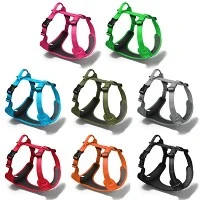


Putting a harness on a dog who resists can be challenging, but with patience, positive reinforcement, and the right techniques, you can make the process less stressful for both of you. Here's a step-by-step guide to help you succeed:
1. Identify the Source of Resistance
Before starting, try to understand why your dog dislikes the harness. Common reasons include:
Fear of the harness: Negative past experiences (e.g., tight fitting, sudden movements).
Discomfort: Ill-fitting harness, sensitive skin, or pain (check for soreness or injuries).
Anxiety about walks: The harness may signal something stressful (e.g., vet visits instead of fun walks).
Sensory sensitivity: Dislike of fabric touching their body.
Addressing the root cause (e.g., adjusting fit, ruling out pain) will make training easier.
2. Desensitization & Positive Association
Help your dog view the harness as a positive thing by pairing it with rewards. Start without trying to put it on:
Show the harness: Let your dog sniff and investigate it. Reward with treats or praise when they approach it calmly.
Associate with treats: Place treats on or near the harness so your dog learns to associate it with food.
Gradual exposure: Wave the harness gently around your dog, reward calm behavior, and slowly move it closer to their body over several sessions.
3. Choose the Right Harness Style
Some harnesses are easier to put on than others. If your dog hates stepping into or over-the-head harnesses, try:
Slip-on harnesses: Slide over the head first, then fasten around the chest (e.g., step-in harnesses can be tricky for resistive dogs).
Front-clip or wrap-around harnesses: Fasten with Velcro or clips on the side or front, avoiding overhead motions.
Harnesses with soft padding: Reduce discomfort for sensitive dogs.
4. Step-by-Step Harnessing Technique
Use these steps for most harness types (adjust based on your harness design):
Step 1: Position Your Dog Calmly
Wait until your dog is relaxed (not excited or anxious).
Kneel or sit on the floor to be at their level, avoiding a dominant stance.
Use a calm, cheerful voice to keep the mood positive.
Step 2: Guide the Head Through (If Applicable)
For over-the-head harnesses:
Hold the harness in front of your dog's face, near their nose.
Use a treat in your other hand to lure their head through the neck loop. As they take the treat, gently slide the loop over their head.
Pro tip: If they pull back, don't force it. Pause, offer another treat, and try again.
Step 3: Secure the Chest/Body Straps
Once the neck loop is in place, gently lift one front paw at a time to thread through the leg holes (for step-in harnesses), or wrap the chest strap around their torso.
For wrap-around harnesses: Fasten the Velcro or clips on the side, ensuring a snug but comfortable fit (you should fit 2 fingers under the straps).
Avoid rushing: If your dog tenses up, pause and give a treat to reward standing still.
Step 4: Reward Immediately
As soon as the harness is secure, give enthusiastic praise and a high-value treat (e.g., chicken, cheese).
Follow with a fun activity (e.g., a walk, playtime) to reinforce that the harness leads to good things.
5. Troubleshooting Common Struggles
My dog runs away when they see the harness
Solution: Start training in a confined space (e.g., a small room) to prevent escape. Use treats to lure them toward the harness instead of chasing them.
My dog paws at the harness or tries to bite it
Solution: Ignore the behavior (don't scold) and wait for calmness. The moment they stop, reward them. Gradually increase the time the harness stays on before removing it.
My dog freezes or becomes tense
Solution: Unclip the harness immediately and try again in a shorter session. Build up tolerance by leaving the harness on for just 5–10 seconds at first, then gradually longer, always with rewards.
6. Use Tools to Assist (If Needed)
Treat pouch: Keep treats handy for quick rewards.
Helper: Have a friend hold your dog's attention with treats while you fasten the harness.
Desensitization videos: Play recordings of dogs happily wearing harnesses to normalize the sight.
7. Practice Regularly
Make harness training a daily routine, even if you're not going for a walk. Put the harness on for short periods (e.g., 1–2 minutes) indoors, reward generously, and remove it calmly.
Gradually increase the time the harness stays on to build confidence.
When to Seek Professional Help
If your dog's resistance is extreme (e.g., aggression, panic, or refusal to move), consult:
A certified dog trainer (look for certifications like CPDT-KA) for behavior modification.
A veterinarian to rule out pain or medical issues (e.g., arthritis, skin irritations).
Key Tips for Success
Never force the harness: This will increase fear and resistance.
Keep sessions short: 5–10 minutes per session, 2–3 times a day, to avoid overwhelming your dog.
Be consistent: Use the same commands (e.g., "let's put your harness on") and routine every time.
With patience, your dog will learn that the harness is a sign of good things to come-not something to fear. Celebrate small wins, and remember that progress may be slow but is always worth it for your dog's comfort!