


Service dogs perform life-changing tasks every day. From guiding visually impaired individuals through busy streets to providing balance support for people with mobility challenges, these highly trained companions offer independence that cannot easily be replaced.
Behind every successful assistance dog, however, is carefully selected equipment designed for safety, comfort, and communication. One of the most overlooked but essential accessories is the service dog pull strap.
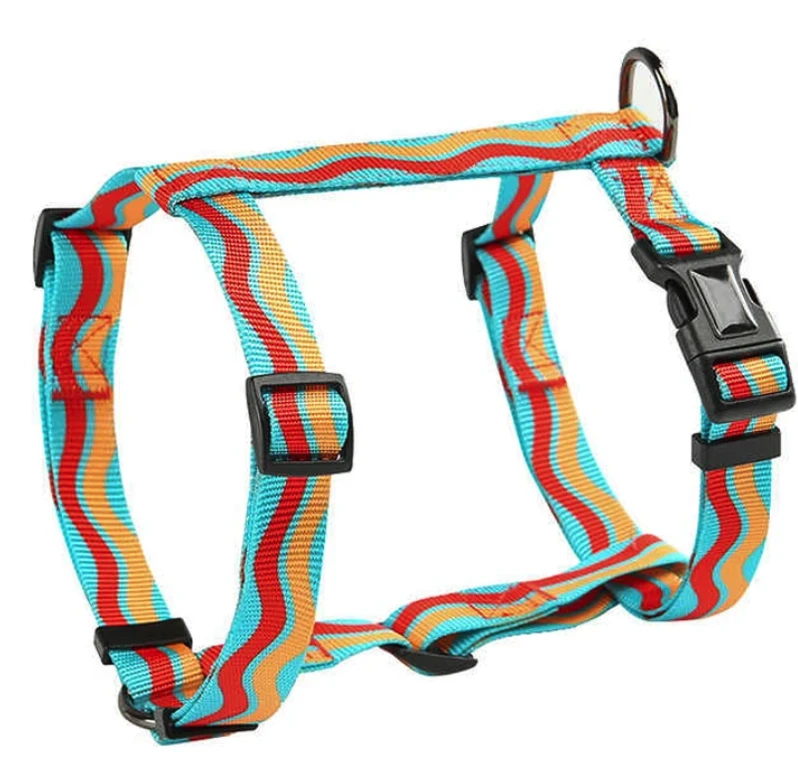
Unlike ordinary dog leashes or decorative harnesses, a pull strap serves as a direct connection between handler and dog, helping transfer movement, maintain stability, and improve coordination during everyday activities.
This guide explains how service dog pull straps work, what features matter most, and how professional manufacturers develop reliable products for working dogs.
Understanding the Purpose of a Service Dog Pull Strap
- Many people assume every service dog uses the same harness system, but working dogs are trained for very different tasks.
- Guide dogs assist visually impaired users by navigating obstacles.
- Mobility assistance dogs provide physical support during walking or standing.
- Medical alert dogs focus on detecting health conditions.
- Psychiatric service dogs perform interruption and grounding tasks.
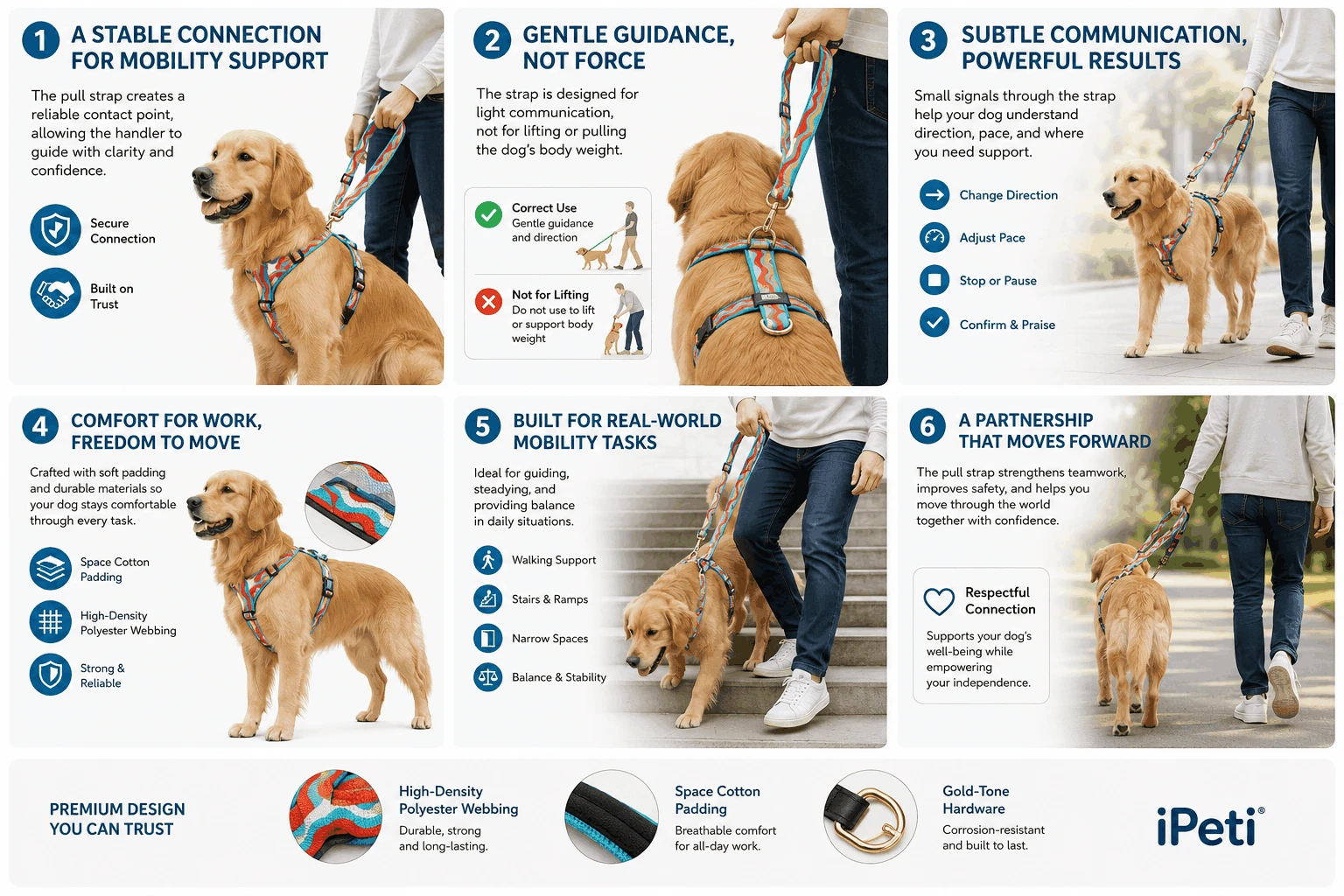
- For mobility assistance applications, the connection between dog and handler becomes extremely important. A pull strap creates a stable contact point that allows gentle guidance without placing unnecessary stress on the animal.
- The strap is not intended for lifting the dog's body weight. Instead, it allows subtle communication while improving handler confidence during movement.
How Pull Straps Improve Daily Mobility
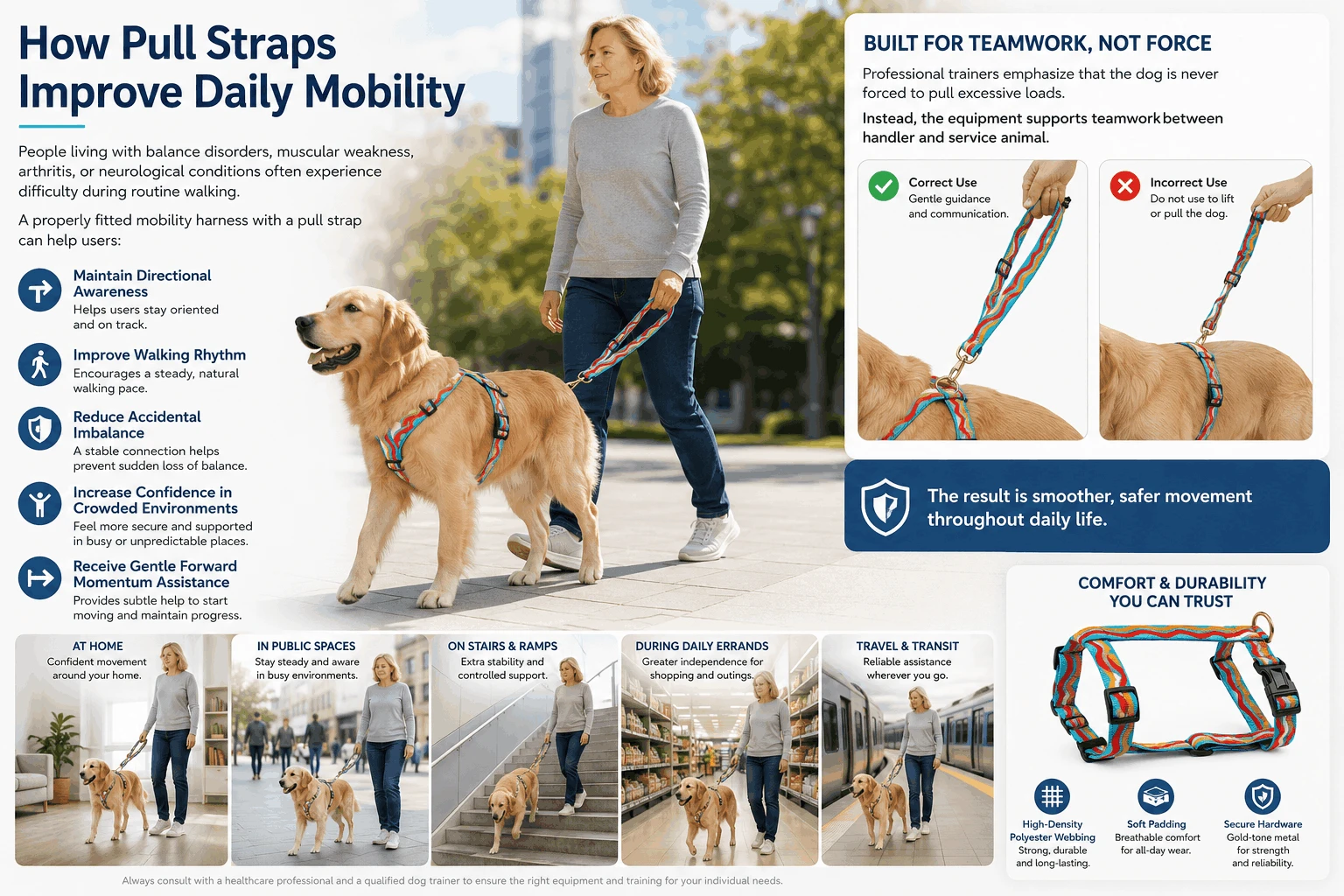
- People living with balance disorders, muscular weakness, arthritis, or neurological conditions often experience difficulty during routine walking.
- A properly fitted mobility harness with a pull strap can help users:
- Maintain directional awareness
- Improve walking rhythm
- Reduce accidental imbalance
- Increase confidence in crowded environments
- Receive gentle forward momentum assistance
- Professional trainers emphasize that the dog is never forced to pull excessive loads. Instead, the equipment supports teamwork between handler and service animal.
The result is smoother, safer movement throughout daily life.
The Difference Between a Pull Strap and a Standard Dog Leash
Many pet owners confuse these products because they both connect people and dogs.
In reality, their functions are completely different.
A traditional leash is designed for restraint and walking control.
A pull strap is engineered to transfer movement cues while remaining rigid or semi-rigid enough to maintain consistent positioning.
The handler can easily feel changes in the dog's direction without needing visual confirmation.
This tactile feedback becomes particularly valuable for visually impaired handlers or users requiring balance assistance.
Materials Make a Significant Difference
Not all service dog equipment is created equally.
Working dogs may spend several hours every day wearing their harness systems, making material quality essential.
Premium manufacturers often use:
- High-density nylon webbing
- Polyester reinforcement layers
- Soft neoprene padding
- Breathable mesh lining
- Heavy-duty zinc alloy hardware
- Corrosion-resistant metal connectors
- Abrasion-resistant stitching
These materials improve durability while minimizing skin irritation and pressure points during extended use.
Low-quality webbing may fray after repeated stress cycles, reducing overall safety.
Investing in reliable materials extends product lifespan while improving user confidence.
Ergonomic Design Protects Both Dog and Handler
- Modern service dog pull straps focus heavily on ergonomics.
- An improperly positioned handle can create unnecessary shoulder strain for the user while shifting pressure toward the dog's spine.
- Professional designs distribute force evenly across the chest and shoulder muscles instead of concentrating stress around the neck.
- Wide straps, reinforced stitching, and padded contact surfaces all contribute to better comfort.
- This allows working dogs to perform daily tasks without unnecessary fatigue.
Why Adjustable Systems Are Becoming More Popular
Every service dog has a unique body structure.
- Golden Retrievers, Labradors, German Shepherds, Standard Poodles, and mixed breeds all require different fitting dimensions.
- Similarly, handlers vary greatly in height and mobility needs.
- Adjustable pull straps allow customized positioning that maintains proper walking posture while reducing awkward arm angles.
- This flexibility improves comfort for long-term use and accommodates different training methods.
Safety Testing Is More Important Than Appearance
Many products available online emphasize fashionable colors or decorative accessories.
Professional assistance equipment should prioritize structural reliability instead.
Key performance tests often include:
- Tensile strength evaluation
- Repeated stitching fatigue testing
- Hardware corrosion testing
- Abrasion resistance
- Buckle cycle testing
- Dynamic load testing
- UV exposure testing
These quality-control procedures ensure that equipment performs consistently under daily working conditions.
Reliable construction provides peace of mind for both handlers and trainers.
Choosing the Right Width and Length
- Pull straps are available in multiple configurations.
- Short straps improve close control during urban walking.
- Medium-length straps balance mobility and comfort.
- Longer straps may suit specialized training applications.
- Width selection also matters.
- Wider webbing distributes pressure more evenly while increasing durability.
- Narrow straps may feel lighter but often concentrate stress over smaller contact areas.
Selecting the correct dimensions depends on dog size, handler height, and intended working tasks.
Proper Training Is Essential
- A pull strap alone does not create a service dog.
- Professional training remains the foundation of successful mobility assistance.
- Dogs must learn controlled forward movement, directional cues, obstacle awareness, stopping behavior, and handler communication before equipment can be fully utilized.
- Responsible trainers gradually introduce the pull strap through positive reinforcement.
- The dog learns that gentle tension represents communication rather than restraint.
- This training approach strengthens cooperation while minimizing stress.
OEM Manufacturing Is Supporting More Assistance Dog Organizations
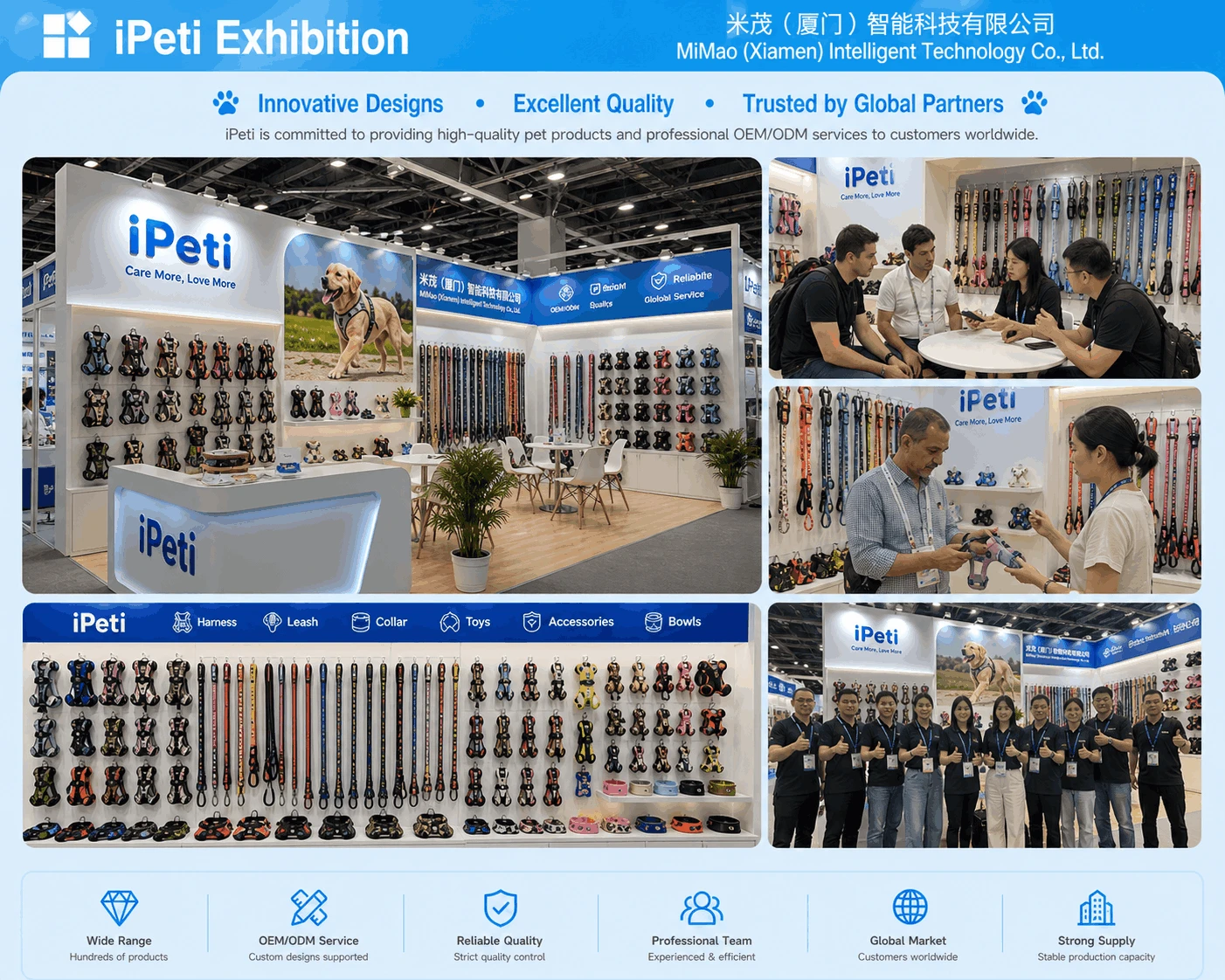
As awareness of service dogs continues growing worldwide, many distributors and nonprofit organizations seek customized equipment that matches their training systems.
- OEM manufacturers now offer:
- Custom logos
- Private label production
- Custom webbing colors
- Reflective materials
- Personalized embroidery
- Adjustable hardware options
- Different handle configurations
- Retail packaging customization
These solutions help organizations establish consistent branding while providing reliable products to service dog users.
Sustainability Is Influencing Product Development
- Environmental responsibility is becoming increasingly important across the pet industry.
- Many manufacturers are introducing recycled polyester webbing, eco-friendly dyeing processes, and reduced-plastic packaging solutions.
- Long-lasting products also reduce unnecessary waste by extending replacement intervals.
- Sustainability and durability now work together as important purchasing considerations for many international buyers.
Common Mistakes Buyers Should Avoid
- Choosing products based only on price often leads to disappointment.
- Thin webbing, weak stitching, and poor hardware quality can reduce product lifespan significantly.
- Another common mistake is selecting equipment without considering the dog's body structure.
- Poor fitting may create discomfort and interfere with natural movement.
- Working with experienced manufacturers who understand assistance dog applications helps avoid these problems while ensuring better long-term performance.
The Future of Service Dog Equipment
Innovation continues shaping the assistance dog industry.
- Future developments may include lightweight composite materials, antimicrobial fabrics, integrated reflective technology, modular attachment systems, and smart wearable accessories.
- However, one principle remains unchanged.
- Comfort, safety, reliability, and effective communication between handler and dog will always remain the foundation of quality mobility equipment.
- A thoughtfully engineered service dog pull strap is more than a simple accessory.
- It represents trust, teamwork, and independence.
- For organizations, retailers, and brands serving the assistance dog market, selecting high-quality pull strap systems is an investment in both user safety and product reputation.
- As demand for mobility assistance solutions continues expanding globally, durable and ergonomic service dog equipment will remain an essential component of modern service dog training and everyday life.