


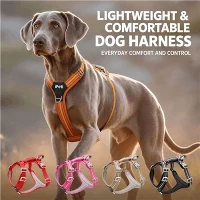
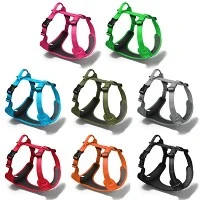


- When choosing a dog collar, harness, or leash, buyers often pay close attention to the webbing, stitching, colors, and overall design. However, one small component deserves just as much attention: the plastic side-release buckle.
- It may look like a simple accessory, but this buckle plays an important role in keeping a pet securely connected to its collar or harness. If it cracks, deforms, fails to lock, or releases unexpectedly, the consequences can be serious. A dog may suddenly escape during a walk, run into traffic, become lost, or get into a dangerous situation.
- This is why the quality of a POM side-release buckle should never be treated as a minor purchasing detail. For pet product brands and importers, choosing the right buckle is part of responsible product safety management.
- At iPeti, we pay attention to the details of pet accessories, including buckle material, structural design, and pulling performance. This article explains why POM is commonly used for pet product buckles, how buckle quality affects product reliability, and how our TS-861WN testing instrument helps evaluate pull strength.
1. Why Does a Small Plastic Buckle Matter So Much?
A side-release buckle connects two parts of a collar or harness. When properly designed and manufactured, its locking mechanism keeps the connection secure during normal use.
Consider a few everyday situations:
- A dog suddenly pulls when it sees another animal.
- A pet owner holds the leash while the dog changes direction.
- A dog runs, jumps, or moves unexpectedly.
- A harness experiences repeated pulling during outdoor activities.
- In these situations, the buckle is exposed to tension, movement, and repeated loading.
If the buckle is made from poor-quality material or has structural defects, it may fail under stress. Even when the webbing and stitching are strong, a weak buckle can become the failure point of the entire product.
A reliable collar or harness therefore needs more than strong fabric. Every load-bearing component must work together.
2. Why Is POM Commonly Used for Pet Product Buckles?
POM stands for Polyoxymethylene, also known as acetal. It is an engineering thermoplastic used in applications where mechanical strength, dimensional stability, and wear resistance are important.
Compared with many general-purpose plastics, suitable POM grades offer several useful characteristics for side-release buckles.
Good Mechanical Strength and Rigidity
- POM has good mechanical strength and stiffness. These properties help a buckle maintain its shape when the two halves are connected and subjected to normal pulling forces.
- For pet collars and harnesses, dimensional stability is important because the locking arms and receiving slots must fit together correctly.
Good Fatigue Performance
- A buckle is not used only once. Pet owners may open and close it several times a day.
- POM is known for good fatigue performance in appropriately designed applications. This makes it a useful material for components that experience repeated movement and mechanical stress.
- However, material fatigue resistance does not mean that every POM buckle will last indefinitely. Design, molding quality, material grade, and actual usage conditions all matter.
Low Moisture Absorption
- Pet products are frequently exposed to rain, water, humidity, and outdoor conditions.
- POM has relatively low moisture absorption, which helps it maintain dimensional stability in environments where moisture exposure is common.
- This is particularly relevant to buckle components that rely on accurate dimensions to engage and release correctly.
Good Wear Resistance
- The locking areas of a side-release buckle come into contact whenever the buckle is opened or closed.
- POM's wear resistance and sliding properties can help reduce wear during repeated operation. This supports smooth engagement and consistent everyday use.
- These material characteristics explain why POM is a suitable engineering plastic for many buckle applications. However, using POM alone does not automatically make a buckle safe. The quality of the finished component still needs to be verified.
3. iPeti POM Side-Release Buckles: Pull Strength by Size
Material descriptions are useful, but actual test data gives buyers a more practical reference when evaluating buckle performance.
For iPeti pet accessory projects, the following maximum pull-force figures are available for our POM side-release buckle options:
| Buckle Width | Maximum Pull Force | Approximate Force |
|---|---|---|
| 25 mm | 155 kgf | 1,520 N |
| 20 mm | 105 kgf | 1,030 N |
| 15 mm | 82 kgf | 804 N |
These figures represent the maximum pull-force values provided for the corresponding buckle sizes.
The results show that the three buckle sizes have different measured pull-force capacities. This is one reason why buckle selection should be based on the actual product design and intended application rather than appearance or width alone.
Why Do Different Buckle Sizes Have Different Pull Strengths?
- Buckle width is one of the factors that can influence structural performance.
- A wider buckle may allow for a different body structure, locking-arm geometry, and load distribution. However, width alone does not determine strength. Material grade, wall thickness, design, injection molding quality, and testing conditions also influence the final result.
- This is why buyers should compare the actual buckle model and its test data rather than assuming that all POM buckles of the same width have identical performance.
An important distinction: Maximum pull force is not the same as a recommended working load.
- The figures above should not be interpreted as the force that a pet product can safely withstand during everyday use. They are not a guarantee against failure under every condition. Actual product performance also depends on the webbing, stitching, buckle attachment, loading direction, wear, and environmental conditions.
- For professional product development, the complete collar or harness should be evaluated under appropriate test conditions.
4. How Does iPeti Test POM Buckle Pull Strength?
At iPeti, we believe that buckle quality should be evaluated through actual testing rather than appearance alone.
To assess the pulling performance of our POM side-release buckles, we use a TS-861WN testing instrument to measure the force applied during tensile testing.
The instrument helps us evaluate the pulling performance of different buckle sizes and provides measurable data for product quality assessment.
During tensile testing, attention should be paid to:
- Whether the buckle body develops cracks.
- Whether the locking arms deform or break.
- Whether the connection releases under increasing tension.
- The maximum force recorded during the test.
- Whether results remain consistent across tested samples.
Why Is Tensile Testing Important?
- A buckle may look strong and function normally when opened and closed by hand. However, its actual resistance to pulling forces cannot be accurately judged by appearance or hand pressure.
- Using a testing instrument allows the applied force to be measured more objectively. This helps identify potential weaknesses in the buckle structure and provides useful reference data for quality evaluation.
- The TS-861WN is the instrument used for the testing described in this article. Actual test results depend on the testing method, sample preparation, loading direction, test speed, and other conditions.
For a more complete assessment, the buckle should also be evaluated as part of the finished product, including its webbing attachment and stitching.
Our testing data is a reference for evaluating buckle performance, not a substitute for complete product safety testing.
5. What Happens When a POM Buckle Is Poorly Made?
A buckle can look acceptable on the outside and still have problems that are difficult to notice without testing.
Here are several potential quality risks.
1. Cracking Under Tension
- If the material is unsuitable, the buckle has insufficient structural strength, or the molding process creates defects, cracks may develop when the component is exposed to pulling forces.
- A crack around the buckle arms, body, or connection points can reduce its ability to hold securely.
2. Weak Locking Arms
- The two flexible arms of a side-release buckle are responsible for engaging with the receiving section.
- If they are too thin, poorly formed, or dimensionally inconsistent, the buckle may not lock securely. They may also become damaged after repeated use.
3. Inaccurate Dimensions
A good buckle needs accurate dimensions and consistent tolerances.
If the male and female parts do not match properly, users may experience problems such as:
- The buckle being difficult to insert.
- The locking arms failing to engage fully.
- Excessive looseness after connection.
- Unexpected release during use.
- A buckle should be easy enough for the owner to operate while remaining securely locked during normal use.
4. Inconsistent Material Quality
- Not all plastics sold as POM necessarily have the same performance.
- The resin grade, material source, formulation, and molding conditions can influence the finished component. Using an unverified or unsuitable material may result in inconsistent strength and durability between production batches.
- For this reason, buyers should not judge buckle quality only by its appearance or by a supplier's statement that it is made from POM.
6. Why Material Quality Is Only One Part of Buckle Safety
A common mistake in sourcing pet accessories is assuming that a buckle made from POM must be reliable.
In reality, the finished buckle depends on several factors.
Material grade: The manufacturer should understand what type and grade of POM resin is being used. Different POM formulations can have different mechanical and processing characteristics.
Structural design: The thickness of the buckle body, locking arms, corners, and connection areas must be appropriate for the intended application.
Injection molding quality: Poor molding conditions can lead to incomplete filling, internal defects, deformation, or inconsistent dimensions.
Dimensional consistency: The male and female parts must fit together correctly. Small differences can affect locking performance.
Production consistency: A buckle that performs well in one sample should also perform consistently across mass production batches.
The important point is that a good material cannot compensate for poor engineering or careless manufacturing.
7. What Other Quality Tests Should Buyers Consider?
Tensile testing is an important part of buckle evaluation, but it is not the only test worth considering.
For importers, wholesalers, and private-label pet brands, requesting samples is a good starting point. However, checking whether a buckle can be connected and disconnected normally is not enough.
A more responsible quality-control process should consider several types of testing.
Repeated Opening and Closing Test
The buckle is opened and closed repeatedly to evaluate the locking mechanism and identify potential wear or changes in operation.
After cycling, the buckle should be checked for:
- Cracks or visible damage.
- Changes in locking performance.
- Loose connections.
- Difficulty operating the release mechanism.
Environmental and Temperature Testing
- Pet accessories may be used in different climates and outdoor conditions.
- Depending on the intended market and product application, buyers may consider testing under relevant temperature and environmental conditions.
- A buckle that performs well at room temperature should not automatically be assumed to perform identically in very cold or hot conditions.
Finished-Product Testing
- Testing the buckle separately is useful, but the complete product also matters.
- For example, a dog harness includes webbing, stitching, adjustment hardware, and buckles. The connection between these components should be evaluated as part of the finished product.
- A strong buckle cannot prevent failure caused by weak stitching or an unsuitable webbing attachment.
8. Stronger Is Not Always the Same as Safer
There is one important detail that pet product buyers should understand: not every buckle should be designed to resist the highest possible force.
The intended application matters.
- For example, some cat collars use specially designed breakaway buckles. These are intended to release under a controlled force to reduce the risk of a cat becoming trapped by its collar.
- This is different from a buckle used on a dog walking harness or leash, where secure retention is normally a primary requirement.
- Therefore, buyers should define the intended function before selecting a buckle.
- A suitable buckle must provide the right balance of retention, release behavior, durability, and ease of use for its specific application.
- The goal is not simply to choose the strongest buckle. It is to choose a buckle whose performance matches the product's safety requirements.
9. What Should Importers Check Before Placing a Bulk Order?
If you are sourcing custom dog collars, harnesses, or leash sets, consider the following points before approving production:
Confirm the material: Ask whether the buckle is made from POM and request material information where available.
Check the buckle design: Examine the locking arms, body thickness, connection areas, and overall finish.
Test the locking action: Make sure both sides engage correctly and release as intended.
Request relevant test information: Ask about tensile, repeated-operation, or other application-specific test results.
Inspect the finished product: Check the buckle together with the actual webbing, stitching, and attachment method.
Keep an approved sample: Use the approved sample as a reference for subsequent production batches.
Check batch consistency: Do not assume that one good sample guarantees the quality of every production batch.
These checks help buyers evaluate the actual quality of a buckle instead of relying on material names or appearance alone.
10. Why Buckle Selection Matters When Developing Private-Label Pet Products
- For a pet brand, a buckle failure is not simply a component defect. It can affect customer trust, product reviews, brand reputation, and potentially pet safety.
- When developing a private-label dog collar, harness, or leash, buckle selection should be discussed at the beginning of the project rather than left until the final production stage.
- Buyers should communicate the intended pet size, product application, expected loading conditions, buckle dimensions, color requirements, and any specific testing expectations.
- A supplier should be able to explain the available buckle options and help coordinate the selection of suitable components for the product design.
- At iPeti, our focus includes customized dog collars, leashes, harnesses, and related sewn pet accessories. We understand that the quality of a finished product depends on the details: webbing, stitching, hardware, buckles, and the way each component is assembled.
- For OEM and private-label projects, we encourage buyers to confirm important components during sample development and evaluate the complete product before approving bulk production.
Frequently Asked Questions
Is POM better than ordinary plastic for dog collar buckles?
POM is an engineering plastic with good mechanical strength, dimensional stability, wear resistance, and fatigue performance. It is often a suitable choice for functional buckle components. However, the actual quality depends on the grade, design, molding process, and testing.
Can a POM buckle break?
Yes. No plastic buckle is unbreakable. Excessive force, impact, unsuitable design, material defects, aging, or manufacturing problems can cause damage or failure.
Does a POM buckle guarantee pet safety?
No. POM is a material choice, not a safety certification. The buckle must be properly designed, manufactured, inspected, and tested for its intended application. The webbing, stitching, and other connecting components must also be suitable.
What is the maximum pull strength of iPeti POM buckles?
The available maximum pull-force figures are 155 kgf for 25 mm buckles, 105 kgf for 20 mm buckles, and 82 kgf for 15 mm buckles. These are maximum pull-force figures, not recommended working loads or guarantees of everyday product safety.
What testing instrument does iPeti use?
iPeti uses a TS-861WN testing instrument for the tensile testing described in this article. The actual test method and conditions should be considered when interpreting the results.
Should dog collars and cat collars use the same type of buckle?
Not necessarily. Dog walking products generally require secure retention under their intended loads. Some cat collars use breakaway buckles designed to release under a specified force. The correct buckle depends on the product's intended function.
What should I ask a supplier before ordering POM buckles?
Ask about the POM material grade, buckle dimensions, design options, available test data, production consistency, and whether the buckle has been evaluated as part of the finished product.
Final Thoughts: Never Overlook the Small Components
A pet collar or harness is made up of several components, and each one has a role to play.
The webbing provides the main structure. Stitching connects the materials. Hardware supports adjustment and attachment. The buckle keeps the connection in place.
If one critical component fails, the performance of the entire product may be compromised.
That is why choosing a suitable POM side-release buckle is not merely about appearance or cost. It is about understanding the material, checking the design, controlling manufacturing quality, and verifying performance through appropriate testing.
For pet product brands, a small buckle deserves serious attention-because product reliability can have consequences far beyond the component itself.
Looking for a reliable OEM partner for custom dog collars, harnesses, or leash sets?
Contact iPeti to discuss your product specifications, buckle options, materials, and OEM requirements.
Website: https://www.ipetis.com/