



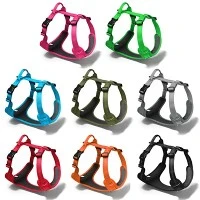


Common Defects in Dog Harness Manufacturing and How to Prevent Them
In the dog harness industry, product quality is not only determined by design and materials, but also by manufacturing precision and quality control systems. Even small production defects can affect safety, durability, and customer satisfaction.
For brands, wholesalers, and distributors, understanding common manufacturing defects is essential to reducing product risk and improving long-term market performance.
1. Weak Stitching at Stress Points
One of the most common issues in dog harness production is insufficient stitching reinforcement.
Typical problems include:
- Loose thread tension
- Incomplete bartack reinforcement
- Uneven stitching density
- Poor seam alignment
These defects often appear in high-stress areas such as chest joints and leash attachment points.
2. Hardware Installation Failures
Metal components play a critical role in harness safety. Poor installation can lead to product failure during use.
Common issues include:
- Loose D-ring fixation
- Weak buckle attachment
- Misaligned metal components
- Inadequate load testing before assembly
Hardware defects can directly compromise walking safety.
3. Material Inconsistency
Inconsistent material quality is another frequent manufacturing issue.
Examples include:
- Variation in webbing thickness
- Uneven dyeing or color mismatch
- Weak fiber density in certain batches
- Reduced abrasion resistance
These inconsistencies affect both appearance and durability.
4. Incorrect Sizing and Pattern Cutting
Accurate sizing is essential for pet comfort and safety.
Common production errors include:
- Incorrect pattern scaling
- Uneven strap length
- Poor adjustment range design
- Inconsistent sizing across production batches
Sizing defects often lead to product returns and customer dissatisfaction.
5. Poor Assembly Alignment
Even when materials are correct, improper assembly can reduce product performance.
Typical issues include:
- Misaligned straps
- Twisted webbing during sewing
- Uneven load distribution
- Incorrect component positioning
These problems affect both usability and aesthetics.
6. Lack of Load Testing and Quality Control
One of the most serious manufacturing gaps is insufficient testing.
Without proper QC systems, products may:
- Fail under pulling force
- Break at connection points
- Degrade quickly under outdoor conditions
Reliable manufacturers always implement pull testing and batch inspection.
How Professional Manufacturers Prevent These Defects
High-quality dog harness production requires strict process control, including:
- Reinforced stitching standards
- Hardware pre-installation inspection
- Material batch consistency checks
- Size verification systems
- Final load testing procedures
These steps significantly reduce defect rates and improve product reliability.
Why Quality Control Matters for Global Pet Brands
For international buyers, manufacturing defects can lead to:
- Product recalls
- Brand reputation damage
- Increased return rates
- Loss of retail partnerships
- Consistent quality is essential for long-term brand success.
Recommended Dog Harness Manufacturing Solutions from iPeti®
Reinforced Dog Harness Series
Designed with upgraded stitching structures, load-bearing testing, and durable hardware systems.


OEM Custom Dog Harness Production
Fully controlled manufacturing process covering materials, sizing, branding, and packaging.


Heavy-Duty Safety Harness Collection
Built for high-strength usage scenarios and strict quality standards.
Final Insight
Most dog harness defects are not caused by design concepts, but by weaknesses in manufacturing execution and quality control systems.
Brands that work with experienced manufacturers can significantly reduce risk while improving product consistency and customer trust.
Frequently Asked Questions
Q1: What is the most common defect in dog harness manufacturing?
Weak stitching at stress points is one of the most common issues, especially in load-bearing areas.
Q2: How can hardware defects be prevented?
Through proper installation, pre-assembly inspection, and load testing of all metal components.
Q3: Why does material inconsistency happen?
It is usually caused by unstable raw material sourcing or lack of batch quality control.
Q4: Can sizing errors be avoided in production?
Yes. Accurate pattern design and sample approval before mass production can reduce sizing issues.
Q5: What is the role of quality control in harness manufacturing?
Quality control ensures product safety, durability, and consistency across all production batches.