


The Ultimate Guide to PVC Printing Dog Collars: Why Modern Pet Brands and Owners are Shifting Away from Traditional Webbing
If you have spent any time managing a pet supply brand, running a busy dog training facility, or simply lifestyle-testing gear with a high-energy pup, you already know the ultimate enemy of dog gear: wet nylon. It starts with a innocent splash in a muddy puddle or a rainy afternoon walk. Within twenty-four hours, that standard textile collar transforms into a swampy, odor-trapping band that makes both dogs and their owners miserable.
For decades, the pet industry relied heavily on woven nylon and polyester webbing. It was cheap to produce, relatively strong, and easy to dye. However, as pet ownership shifts toward lifestyle integration-where dogs accompany their owners to outdoor restaurants, on rugged hikes, and inside pristine living rooms-the technical limitations of traditional materials have become impossible to ignore. Woven fibers absorb water, collect microscopic bacteria, fray under heavy scratching, and hold onto stains like a sponge.
This structural flaw has driven a massive surge in alternative materials, most notably coated webbing. Among the top choices emerging in the premium market is the PVC Printing Dog Collar, a highly durable, waterproof alternative that blends industrial-grade strength with unlimited aesthetic customization.
Let's break down why this specific engineering shift is happening, how PVC holds up against other options like leather and standard synthetics, and what pet brands need to look for when sourcing these products for a modern consumer base.
1. What Exactly is a PVC Coated Printing Collar?
To understand why this material performs so differently from a standard collar, we have to look beneath the surface. A quality PVC collar isn't just a raw strip of plastic; it is a composite material engineered for structural integrity.
At its core sits a high-tensile internal webbing-usually made from woven polyester or nylon. This internal core provides the actual tensile strength required to handle large, pulling breeds without snapping. If you were to use raw vinyl or thin plastic alone, the material would stretch under tension, become brittle in freezing temperatures, or tear at the adjustment holes under sudden stress.
The magic happens during the extrusion process. The inner core is completely encased in a smooth, thick layer of Polyvinyl Chloride (PVC). This exterior shielding is melted down and sealed tightly around the fabric core, creating a non-porous, unified strap. Because the outer layer is completely solid, water, mud, oil, and bacteria cannot penetrate the internal fibers.
When we talk about a printing version of these collars, a specialized transfer layer or high-adhesion UV print is applied directly to the surface before or during a final protective coating phase. This allows manufacturers to move away from boring, solid industrial colors and introduce complex patterns, geometric designs, high-visibility safety graphics, or custom brand patterns without sacrificing any of the material's underlying waterproof benefits.
2. The Core Problems with Legacy Materials

To see why a PVC printing dog collar is growing in market share, it helps to examine what happens to traditional options over months of real-world wear.
Nylon and Polyester Webbing
Woven fabrics are essentially millions of tiny interlocking loops. Every time a dog rolls in the grass, digs in dirt, or swims, those microscopic spaces between the threads act as catch-all pockets. Dust particles grind against the fibers, weakening them over time (a process called micro-abrasion).
Worse, moisture gets locked inside the weave. When left to dry at room temperature while still attached to the animal, it creates a dark, damp environment perfect for skin-irritating microbes. This is the root cause of the classic "smelly dog collar" syndrome, which can lead to hot spots, fur loss, and bacterial dermatitis around a dog's neck.
Traditional Leather
Leather looks beautiful right out of the box and has a classic, premium appeal. However, it requires an immense amount of maintenance. True leather is skin; it contains natural oils that keep it supple. When leather gets soaked repeatedly and then dries out, those natural oils evaporate, causing the collar to stiffen, crack, and eventually split.
If you don't regularly clean it with saddle soap and condition it with mink oil, a leather collar exposed to heavy outdoor use will deteriorate rapidly. Furthermore, from a manufacturing and sourcing standpoint, natural leather exhibits variations in thickness, scars from the animal's life, and a high wastage rate during cutting, making consistent quality control a challenge for large-scale brands.
3. Why PVC Printing Collars are Winning: A Feature-by-Feature Breakdown
When evaluating pet gear for a retail catalog or checking its viability for rugged outdoor activities, several performance metrics matter most. Let's look at how printed PVC performs across these categories.
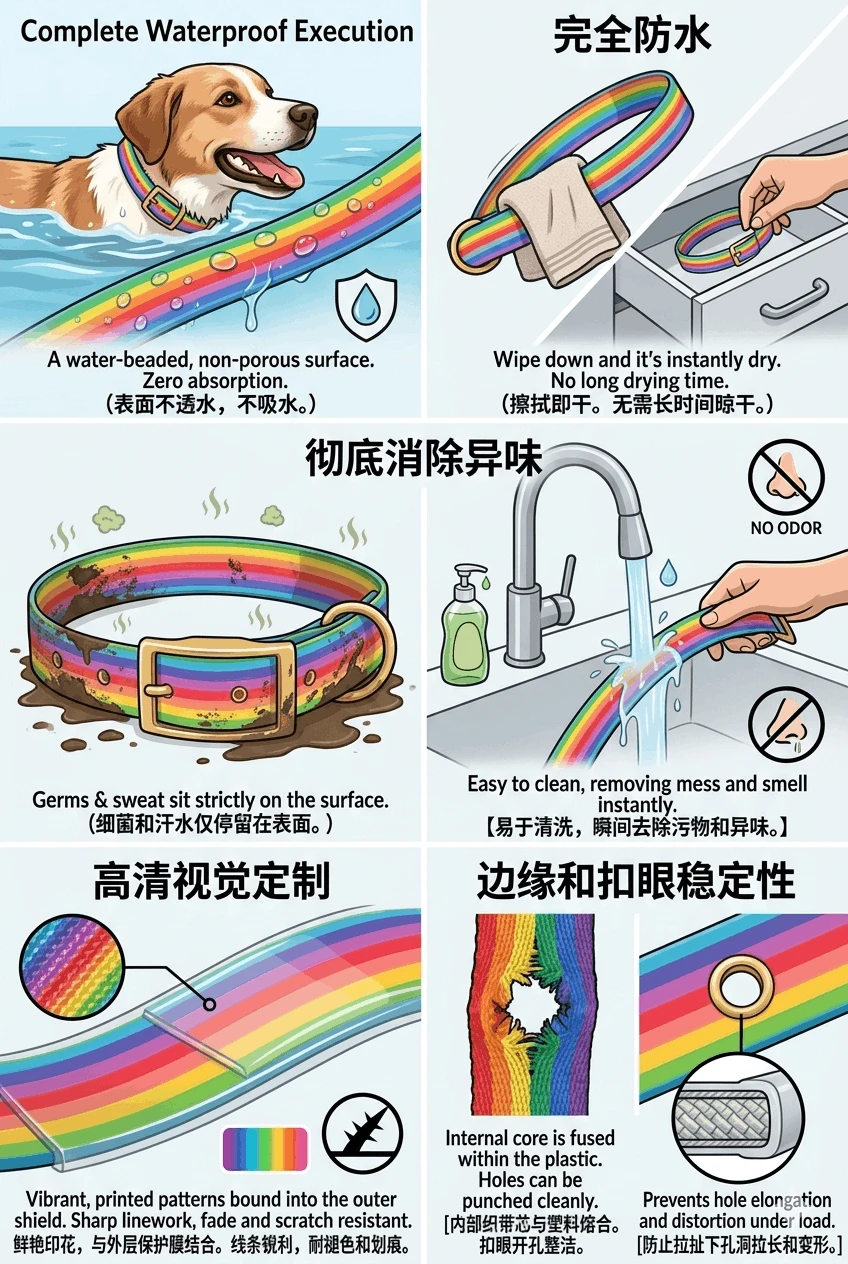
Complete Waterproof Execution
A PVC-coated surface has zero porosity. If a dog dives into a lake or runs through a downpour, the collar absorbs exactly zero percent water. When the walk is over, you don't have to hang the collar over a radiator to dry for four hours. You simply wipe it down with a dry towel, and it can go right back into a drawer or stay on the dog without causing dampness against their fur.
Odor Elimination
Because bacteria, sweat, and environmental grime cannot embed themselves into the material, the collar cannot develop a permanent smell. If a dog rolls in something foul at the park, the residue sits strictly on the glossy or matte surface layer. A quick rinse under a kitchen faucet with a drop of dish soap removes both the visible mess and the smell instantly.
High-Definition Visual Customization
In the past, if a brand wanted a custom pattern on a collar, they had to rely on dye-sublimation on polyester ribbon, which was then sewn onto nylon webbing. These ribbons scratch easily, snag on brambles, and fade dramatically after a few weeks of UV exposure from the sun.
With advanced PVC printing techniques, patterns are bound directly into the outer shield. This results in vibrant color retention, sharp linework for intricate logos, and an scratch-resistant finish that keeps the graphics looking crisp even if the dog scrapes against rocks or chain-link fences.
Edge and Hole Stability
One of the weakest points on any collar is the adjustment holes. On fabric collars, these holes must be melted down or fitted with metal grommets to prevent fraying. Over time, the pull of the buckle pin stretches the fabric hole, causing it to distort and unravel.
PVC coated webbing can be cleanly punched without compromising the material. The internal woven core remains locked within the fused plastic boundary, preventing the hole from elongating or tearing out under heavy load.
4. Analyzing the Texture: Matte Leather-Mimic vs. Glossy Finishes
Not all PVC collars feel or look the same. Depending on the formulation used during the coating extrusion, manufacturers can alter both the flexibility and the surface texture of the material.
| Metric | Matte Leather-Mimic PVC | High-Gloss Graphic PVC |
| Surface Feel | Micro-textured, soft-touch, simulates premium split leather. | Ultra-smooth, slick, highly reflective surface. |
| Flexibility | Remains highly flexible even in freezing temperatures (down to -20°C). | Slightly stiffer profile, provides excellent structural form. |
| Visual Style | Subtle, high-end, organic appearance suited for boutique designs. | Bright, modern, exceptional clarity for intricate printed patterns. |
| Best Used For | Everyday luxury wear, heavy-duty tracking, and training. | Safety/hunting gear, high-fashion street styles, water sports. |
For brands trying to appeal to customers who traditionally prefer leather, the matte-finish PVC is an easier sell. It offers the exact same tactile hand-feel and weight as a conditioned leather strap but carries all the low-maintenance, waterproof advantages of synthetic materials.
5. Engineering and Sourcing Considerations for Brands
If you are an commercial pet product importer, an Amazon brand manager, or a boutique store owner looking to add a PVC printing dog collar line to your inventory, you cannot treat this material as a generic commodity. There are specific production choices that separate a premium product from a cheap, flawed imitation.
Tensile Core Strength Consistency
When choosing a manufacturing partner, always request data sheets on the inner webbing. A cheap PVC collar might use a loose, low-grade polyester scrap core disguised inside a thick layer of plastic. Under sudden impact-such as a 90-pound German Shepherd lunging at a squirrel-the inner core can snap, leaving only the soft outer plastic to stretch and fail. Ensure the manufacturer uses high-density, continuous-filament polyester webbing inside.
Hardware Match and Corrosion Resistance
A completely waterproof strap is useless if the hardware rusts after the first beach trip. When pairing hardware with PVC, look for components that match the longevity of the vinyl strap:
Solid Brass: The gold standard for outdoor dog gear. It develops a beautiful natural patina over time and will never rust, even when exposed to salt water.
Aviation-Grade Aluminum Buckles: Perfect for brands targeting the tactical or ultra-lightweight hiking market. They offer incredible break-strength with minimal weight.
Electroplated Zinc Alloy: A cost-effective option for everyday retail, provided the plating thickness is sufficient to withstand constant friction against lead clips without chipping.
Cold-Weather Flexibility Testing
Low-quality PVC contains cheap plasticizers that react poorly to temperature drops. If a dog wears a low-grade PVC collar in northern winter climates, the material can stiffen up, becoming hard as iron and developing micro-fractures along its edges. Premium PVC formulations are engineered to remain supple and comfortable against an animal's skin even in sub-zero temperatures.
6. Sizing, Fitment, and Pet Comfort Architecture

From an ergonomics perspective, a collar must work with the natural anatomy of the dog. Because PVC has a higher surface friction coefficient than silky nylon webbing, it behaves differently when resting against a dog's neck.
Preventing Coat Abrasion
When a nylon collar is loose, it slides smoothly across the dog's fur. PVC has a slightly more rubberized, grippy texture. If a collar is fitted too tightly, this grip can tug at the undercoat of long-haired breeds or rub against the skin of short-coated breeds like Boxers or Great Danes.
To prevent coat friction, premium PVC printing collars are built with rounded, smoothed edges rather than raw, sharp square cuts. This ensures that as the dog moves its neck, the collar edges roll gently against the coat rather than scraping it.
The Correct Fitment Rule
When instructing end consumers on how to fit a PVC collar, the traditional "two-finger rule" needs a slight modification. Because the material doesn't compress or stretch like fabric, owners should ensure that two fingers can slip flat beneath the band easily without pinching the skin. It should sit slightly lower on the neck base where the muscle structure is wider, preventing the collar from binding up behind the ears during leash tension.
7. Sustainability and Modern Manufacturing Realities
As consumer awareness surrounding environmental footprints continues to grow, pet parents are actively asking about the lifecycle of their gear. How does PVC fit into a conscious purchasing framework?
The primary eco-advantage of a high-quality PVC printing dog collar lies in its extended replacement cycle.
Consider the typical lifecycle of a standard nylon collar worn by an active, outdoor dog. Due to fraying, permanent staining, and unfixable odor buildup, the average owner replaces a fabric collar every 6 to 12 months. Over a dog's lifetime, that results in 10 to 15 discarded synthetic collars heading straight into a landfill.
Because a premium PVC collar is virtually indestructible, immune to rot, and infinitely cleanable, a single collar can easily last for the entire adult life of the animal. By drastically extending the product lifecounter, it reduces the overall raw material consumption, shipping energy, and manufacturing waste associated with frequent replacements.
Furthermore, leading manufacturers in this space are increasingly adopting eco-friendly stabilizing agents during extrusion, moving completely away from heavy metals and ensuring the finished product is non-toxic and safe for prolonged contact with both human hands and animal skin.
8. How to Maintain a PVC Printing Collar for Lifelong Performance
While these collars are incredibly low-maintenance, sharing clear care guidelines with your customer base adds massive value and builds long-term brand trust. Fortunately, the instructions are incredibly simple.
Step 1: Routine Quick Clean For daily dust, mud, or river water, simply hold the collar under warm running tap water for 15 seconds. Wipe down with a microfiber cloth. Step 2: Deep Cleaning for Stubborn Stains If the dog encounters grease, sap, or pungent organic waste, fill a small bowl with warm water and add a few drops of mild liquid dish soap. Step 3: Scrubbing the Print Layer Use a soft-bristled toothbrush or a non-scratch sponge to gently work the soapy mixture over the printed patterns. Do not use harsh steel wool or abrasive chemical solvents like acetone, as these can strip the clear protective topcoat protecting the artwork. Step 4: Hardware Maintenance Pay special attention to the moving parts inside a quick-release buckle or around the roller pin. Rinse out any trapped sand or grit from the beach, dry thoroughly with a towel, and apply a single drop of mineral oil to the spring mechanism once a year to ensure smooth operation.
9. Market Trend Analysis: What Is Driving Modern Consumer Demand?
If you look at retail sales data across global pet markets over the last five years, there is an unmistakable trend: consumers are buying fewer items overall, but they are spending significantly more per item on gear that promises durability and clean design aesthetics.
The rise of the "Pet Humanization" movement means that dogs are no longer restricted to the backyard. They go to office buildings, ride in clean cars, sleep on expensive beds, and sit under tables at craft breweries. A dog wearing a filthy, water-logged, bad-smelling nylon collar ruins that integrated lifestyle experience. Owners don't want a smelly collar transferring odors onto their leather car seats or premium home upholstery.
The PVC printing dog collar serves as a direct technical solution to this modern lifestyle challenge. It allows a dog to be a dog-to dive into mud, chase ducks through marshes, and roll in the dirt-while allowing the owner to instantly restore the gear to a pristine, odor-free condition within seconds of returning home.
For brands looking to future-proof their product lines, moving into premium coated substrates isn't just an option anymore; it is becoming the expected baseline for any company positioning itself in the premium, functional outdoor, or high-end lifestyle pet space. By investing in proper material construction, high-fidelity custom printing, and corrosion-resistant hardware, you create a product that stands out on retail shelves and delivers undeniable utility in the daily lives of dogs and their owners worldwide.
10. Frequently Asked Questions (FAQ)
Q1: Will the printed patterns on a PVC collar fade or peel off after prolonged sun exposure?
Unlike traditional nylon collars where printed ribbons are stitched onto the surface and easily fray or fade, patterns on a premium printed PVC collar are fused directly into or underneath a protective clear coating layer during the extrusion and finishing process. This high-adhesion UV-resistant printing technique ensures that the graphics remain vibrant and do not peel, chip, or flake away, even when exposed to intense sunlight, constant outdoor play, or rough scratching.
Q2: Is PVC safe and non-toxic for dogs who have sensitive skin or tend to chew on their collars?
Yes, high-grade PVC coated webbing used by reputable manufacturers is thoroughly tested to be non-toxic, lead-free, and phthalate-free. Because the material is completely non-porous, it cannot harbor mold, mildew, or skin-irritating bacteria like woven textiles do. This makes it an exceptionally hygienic choices for dogs prone to contact allergies, hot spots, or skin sensitivities. However, as with any collar, it should be sized correctly to prevent physical chafing, and dogs should not be allowed to use it as a chew toy.
Q3: How do PVC printing collars perform in extreme cold weather? Do they stiffen up or crack?
Low-grade plastic alternatives can become rigid and brittle when temperatures drop. However, professional-grade PVC formulations are engineered with specialized cold-weather plasticizers. This allows the collar to retain its soft, pliable, and comfortable texture even in sub-zero winter climates (down to -20°C). It will not develop micro-fractures along the edges or around the adjustment holes during heavy snow tracking or freezing weather walks.
Q4: Can these collars be customized with specific brand logos, geometric patterns, or reflective safety strips?
Absolutely. One of the main advantages of choosing a printing-specific PVC collar over a standard solid-color vinyl strap is its exceptional design flexibility. Manufacturers can easily accommodate complex multi-color patterns, intricate corporate logos, seasonal holiday prints, and high-visibility reflective elements. This allows pet brands to create highly differentiated product lines that match their unique visual identity or cater to specific niches like nighttime safety or hunting.
Q5: How does the weight and flexibility of a PVC collar compare to genuine leather or heavy-duty nylon?
PVC coated webbing offers a uniquely balanced structural profile. It matches the solid, premium weight and supple hand-feel of well-conditioned, high-end split leather, giving it an immediate sense of luxury on retail shelves. At the same time, it is more flexible and requires zero break-in time compared to a brand-new, thick leather strap. It is slightly heavier than ultra-lightweight single-ply nylon webbing, but its waterproof and maintenance-free nature far outweighs the minimal weight difference for everyday use.
Q6: What is the average lifespan of a printed PVC collar under heavy outdoor use?
Under normal daily conditions-including regular swimming, mud exposure, and hiking-a premium PVC collar can easily last for several years, often spanning the entire adult lifespan of a dog. While a standard fabric collar typically needs to be discarded every 6 to 12 months due to unfixable odor absorption or frayed edges, PVC does not rot, fray, or degrade structurally from moisture, making it a highly sustainable and cost-effective long-term investment.