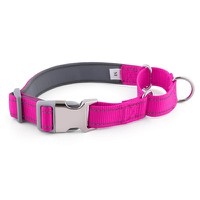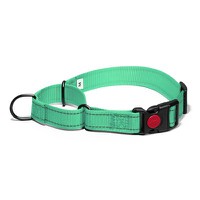


The "Harness vs. Collar" debate is one of the most common among new pet parents. For training purposes, the answer depends entirely on your dog's behavior and your specific training goals.
Training with a Collar
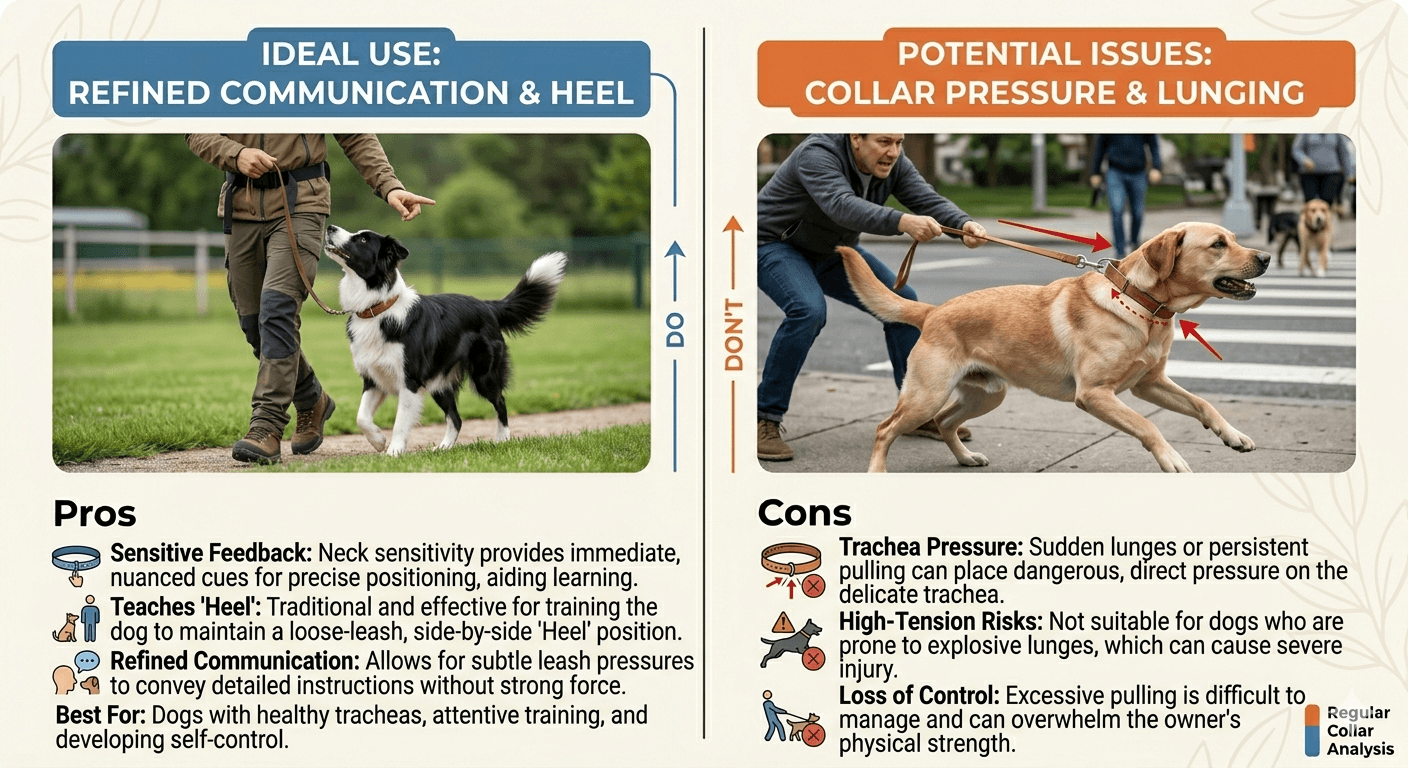
Collars are the traditional choice for teaching "leash pressure." Because the neck is a sensitive area, the dog receives immediate feedback when they reach the end of the leash.
Best for: Teaching "Heel," refined communication, and dogs who don't have respiratory issues.
Risk: If a dog lunges or pulls excessively, a collar can put dangerous pressure on the trachea.
Training with a Harness
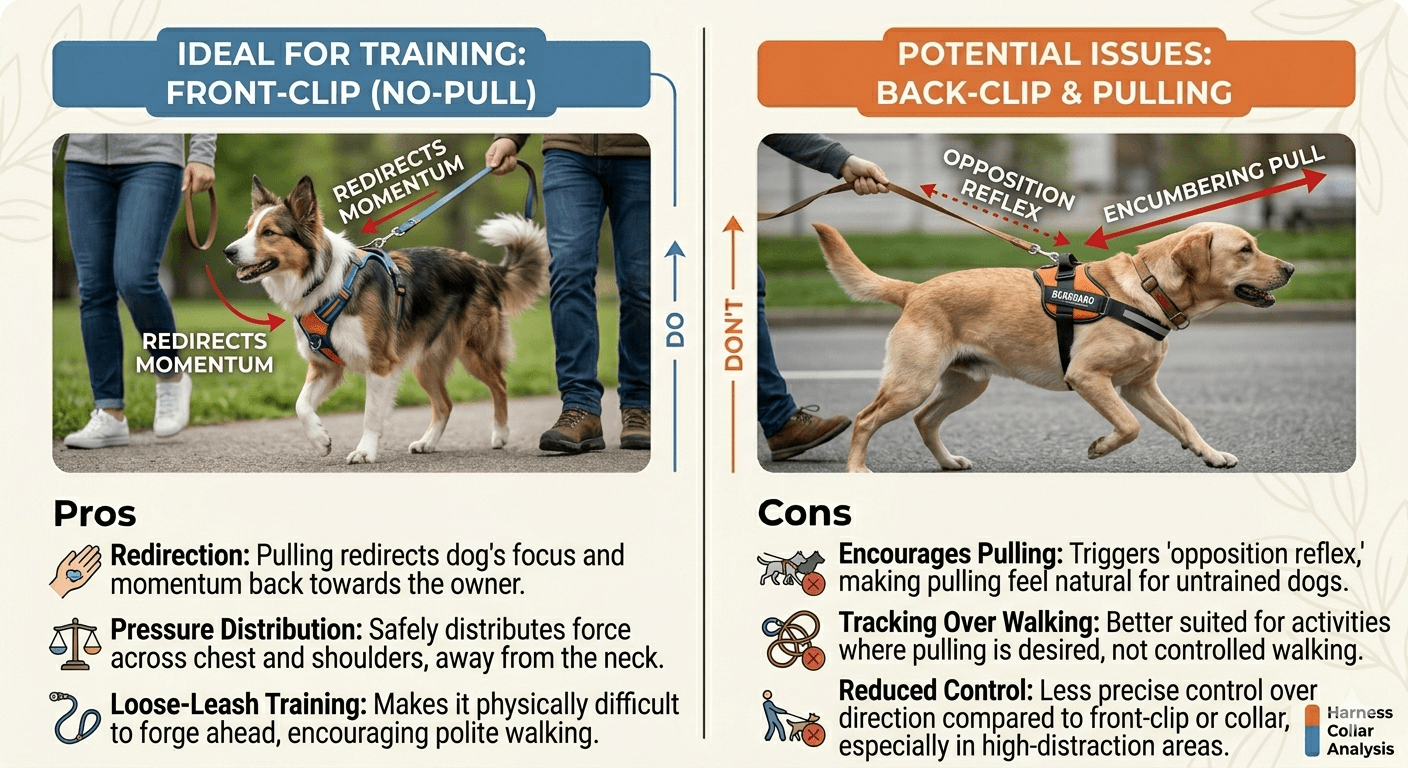
Harnesses take the pressure off the neck and distribute it across the chest and shoulders.
Front-Clip (No-Pull) Harnesses: These are game-changers for training. When the dog pulls, the front attachment point redirects their momentum back toward you, making it physically difficult for them to forge ahead.
Back-Clip Harnesses: Excellent for tracking or hiking, but can actually encourage pulling in untrained dogs due to the "opposition reflex" (the same instinct that allows sled dogs to pull).
Which should you choose?
Use a Harness if your dog is a heavy puller, a brachycephalic breed (like a Pug or Bulldog), or if you are focusing on loose-leash walking.
Use a Collar for dogs who have already mastered the basics or for professional obedience training where subtle cues are necessary.
Hot product