

Large breeds like German Shepherds, Labradors, and Great Danes require gear that can handle their strength without sacrificing comfort. When shopping for a large dog, look for these three non-negotiables:
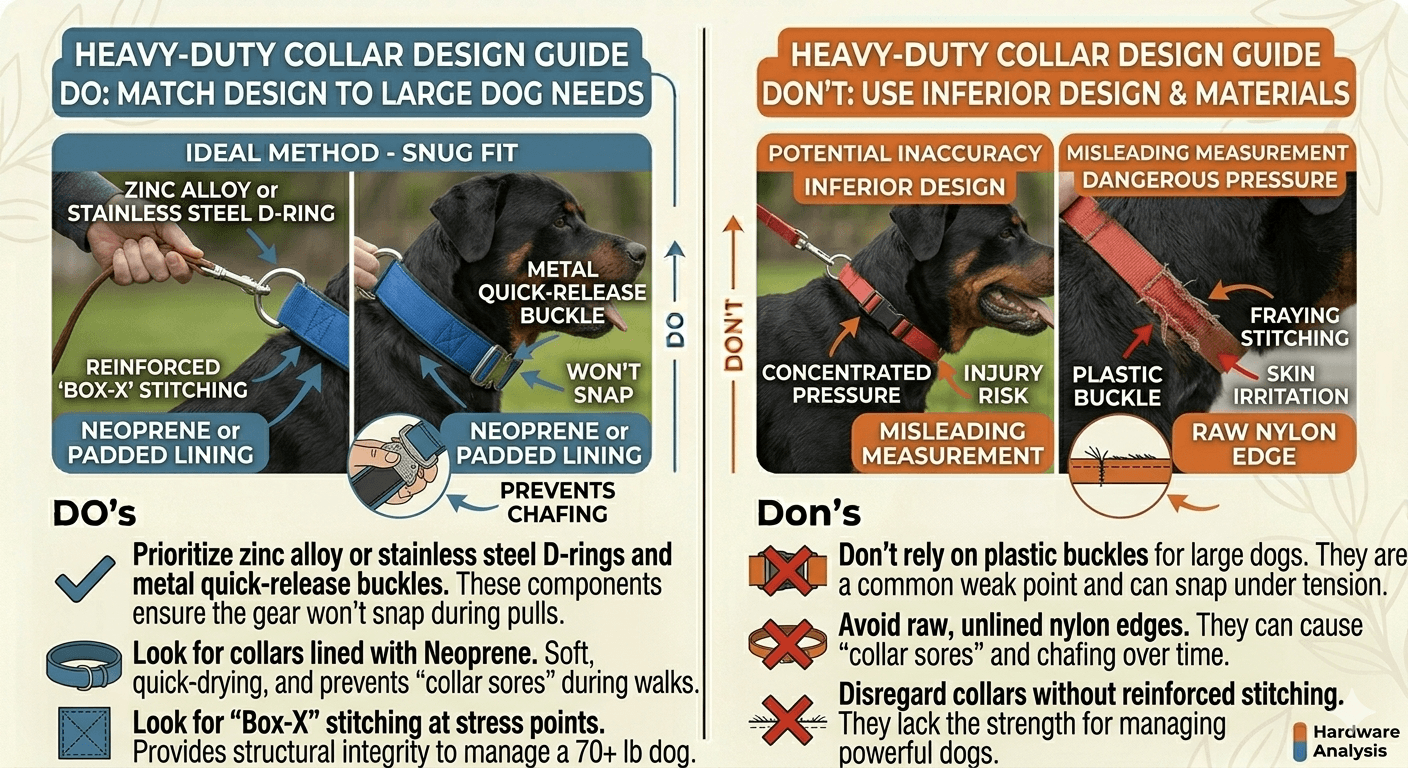
1. Heavy-Duty Hardware
Plastic buckles are the weak point of any collar. For a large dog, prioritize zinc alloy or stainless steel D-rings and metal quick-release buckles. These components ensure that even if the dog lunges at a squirrel, the gear won't snap.
2. Neoprene or Padded Lining
Large dogs have more mass and can exert more force. A raw nylon edge can cause "collar sores" over time. Look for collars lined with Neoprene (the material used in wetsuits). It's soft, quick-drying, and prevents chafing during long walks.
3. Reinforced Stitching
Look for "Box-X" stitching at the stress points (where the buckle and D-ring are attached). This provides the structural integrity needed to manage a 70+ lb dog.
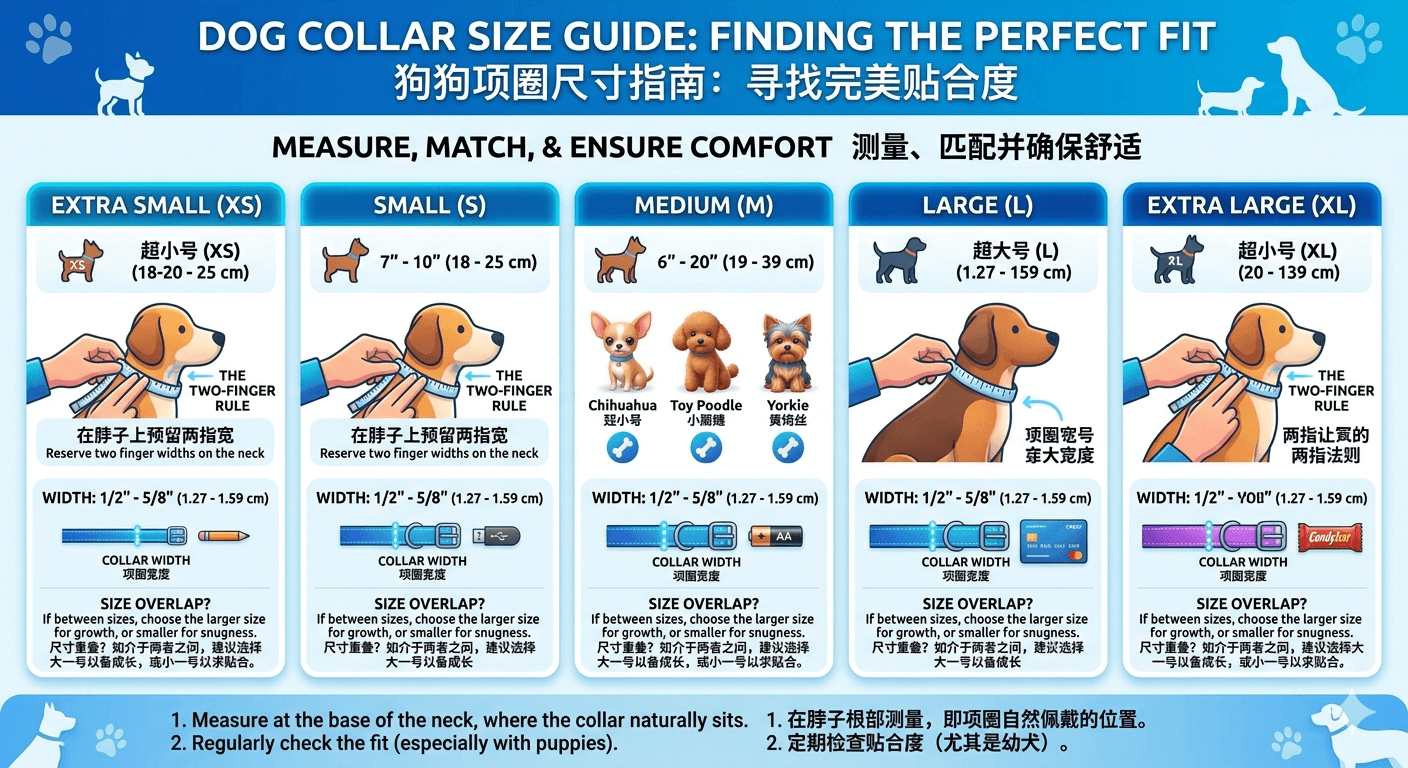
Dog Collar Size Chart
While every brand varies slightly, this chart provides a professional standard for choosing the right size based on breed and neck measurements.
| Size | Neck Measurement | Common Breeds | Recommended Width |
| Extra Small (XS) | 7" - 10" | Chihuahua, Toy Poodle, Yorkie | 1/2" - 5/8" |
| Small (S) | 10" - 14" | Beagle, Jack Russell, Cavalier | 5/8" - 3/4" |
| Medium (M) | 14" - 20" | Border Collie, Cocker Spaniel | 3/4" - 1" |
| Large (L) | 18" - 26" | Golden Retriever, German Shepherd | 1" - 1.5" |
| Extra Large (XL) | 22" - 32" | Great Dane, Mastiff, Saint Bernard | 1.5" - 2" |
Pro Tip: If your dog's measurement falls at the very end of a size range (e.g., a 20" neck on a Medium collar), always size up to the Large. This ensures you have enough room for adjustment and that the buckle isn't under constant tension.