


Why Tensile Testing Matters for PVC Dog Collars
For pet product manufacturers, product safety is not only about appearance and comfort. A dog collar is a daily-use product that needs to withstand pulling forces, sudden movements, and long-term wear during outdoor activities.
At iPeti, quality control is integrated into every stage of production. Before PVC dog collars are shipped to customers, we conduct material and structural inspections to verify that the collar webbing, PVC coating, buckle, D-ring, and stitching structure can meet practical usage requirements.
One important quality verification method is tensile strength testing, which helps us understand the actual load capacity of the finished collar assembly under controlled laboratory conditions.
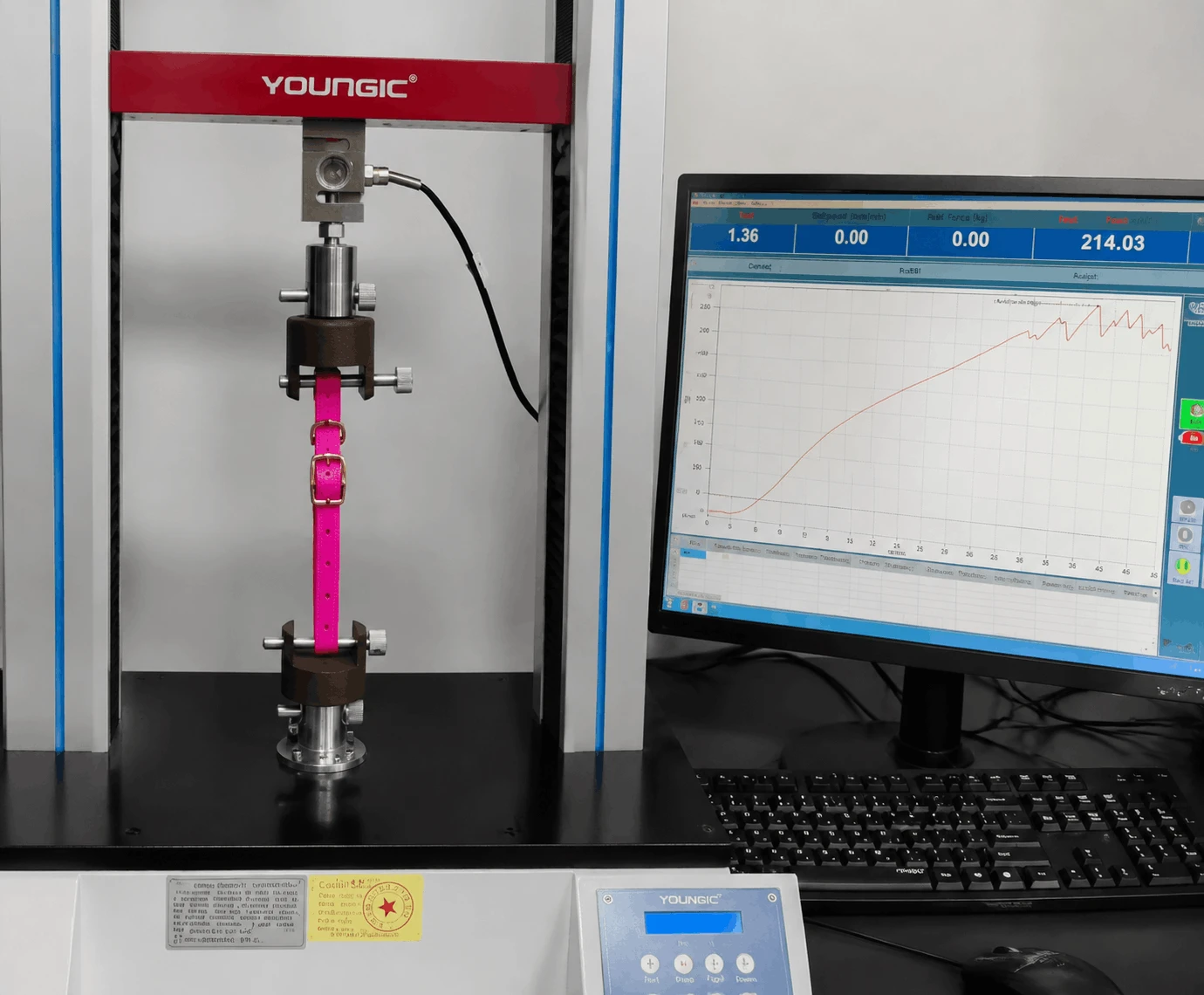
Laboratory Tensile Test for PVC Dog Collars
The tensile test shown in the laboratory image is performed using a professional tensile testing machine. The PVC dog collar sample is fixed between two metal clamps, and the machine applies continuous pulling force until the product reaches its maximum load point.
During testing, the system records:
- Applied pulling force
- Load changes during stretching
- Maximum breaking strength
- Force curve variation throughout the test
The test data provides valuable information about the overall strength of the collar structure, helping our engineering team evaluate whether the product design meets expected performance requirements.
Actual Test Result: 214.03 KG Maximum Tensile Force
In this specific PVC dog collar tensile test, the recorded maximum force reached:214.03 KG
The value shown on the testing software represents the actual measured pulling force during the laboratory test.
- The force curve displayed on the computer monitor shows the progressive loading process:
- Initial stage: The collar structure begins to bear tension.
- Middle stage: The webbing and PVC-coated material gradually absorb increasing force.
- Final stage: The product approaches its maximum load capacity before failure.
This real test result demonstrates the mechanical strength of the complete collar system, including:
- PVC-coated strap material
- Metal buckle connection
- D-ring attachment area
- Reinforced stitching structure
Testing the Complete Collar Structure, Not Only the Material
A common misunderstanding in pet product manufacturing is that testing only the fabric or webbing strength is enough. In reality, a dog collar works as a complete system.
During our tensile testing process, we evaluate the interaction between multiple components:
1. PVC-Coated Webbing Performance
- PVC coating provides additional protection for the inner webbing structure, improving:
- Abrasion resistance
- Surface durability
- Water resistance
- Easy cleaning performance
- The tensile test helps confirm whether the PVC-coated strap maintains structural stability under high pulling forces.
2. Hardware Connection Strength
- The buckle and D-ring are critical load-bearing components.
- During testing, we pay close attention to:
- Hardware deformation
- Connection point stability
- Metal component strength
- Attachment reliability
- A strong strap is meaningless if the hardware connection cannot handle the same force level.
3. Stitching Reinforcement Quality
The stitching area is one of the most important stress points on a collar.
- Our production process focuses on:
- Reinforced stitching patterns
- Consistent sewing quality
- Proper thread selection
- Controlled stitching density
- The tensile test allows us to identify whether the stitching structure can transfer force effectively through the collar.
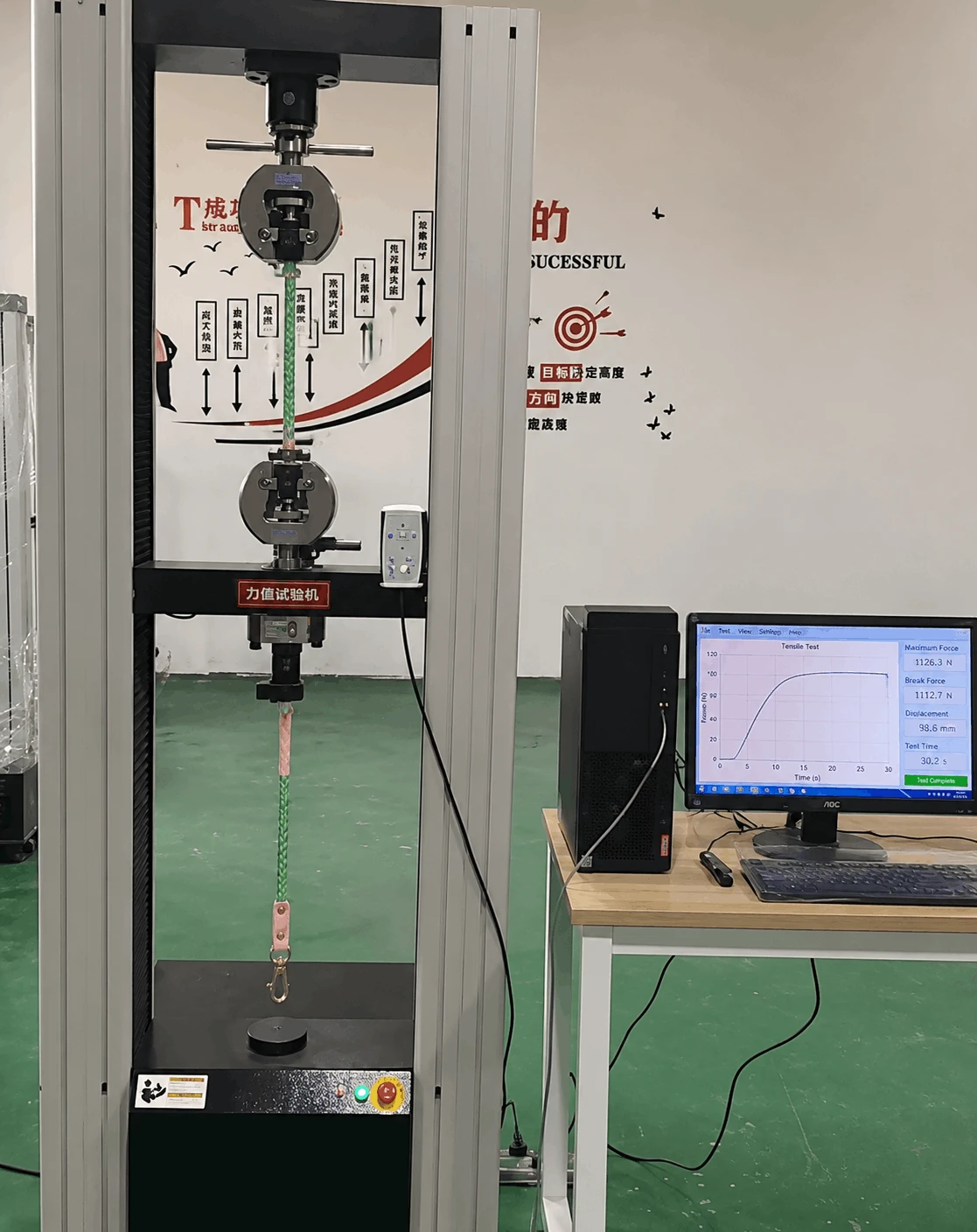
Quality Control Process Before Shipment
At iPeti, quality inspection is not limited to final product checking. Our QC system covers the entire manufacturing process:
Material Inspection
Before production:
- PVC webbing appearance inspection
- Width and thickness measurement
- Color consistency checking
- Hardware quality verification
Production Monitoring
During manufacturing:
- Sewing process inspection
- Hardware attachment checking
- Size measurement
- Logo and packaging verification
Finished Product Testing
Before shipment:
- Appearance inspection
- Functional checking
- Random strength testing
- Packaging inspection
This multi-stage approach helps reduce production risks and ensures consistent quality for global customers.
Designed for Global Pet Brands and Retailers
For wholesalers, retailers, and private label brands, product reliability is essential. A pet collar represents not only a product but also the reputation of the brand selling it.
By performing laboratory tensile testing, we provide customers with stronger confidence in:
- Product safety
- Manufacturing consistency
- Supplier reliability
- Long-term market performance
- Whether developing standard PVC dog collars or customized private label collections, our engineering and quality teams work closely with customers to optimize materials, structures, and production processes.
OEM & ODM Quality Support

As a professional pet product manufacturer, iPeti supports customized solutions including:
Custom PVC dog collar designs
Private label branding
Logo printing
Custom colors
Hardware selection
Packaging customization
Our goal is not only to manufacture pet products but also to help global brands build reliable product lines supported by professional manufacturing and quality control systems.
Conclusion
The PVC dog collar tensile test shown above is part of our commitment to measurable product quality. The recorded 214.03 KG tensile force result represents an actual laboratory measurement from our testing process.
Through continuous testing, production control, and manufacturing improvement, we aim to provide safer, more reliable, and better-performing pet products for customers worldwide.
Quality is not only inspected at the end of production - it is built into every manufacturing step.